


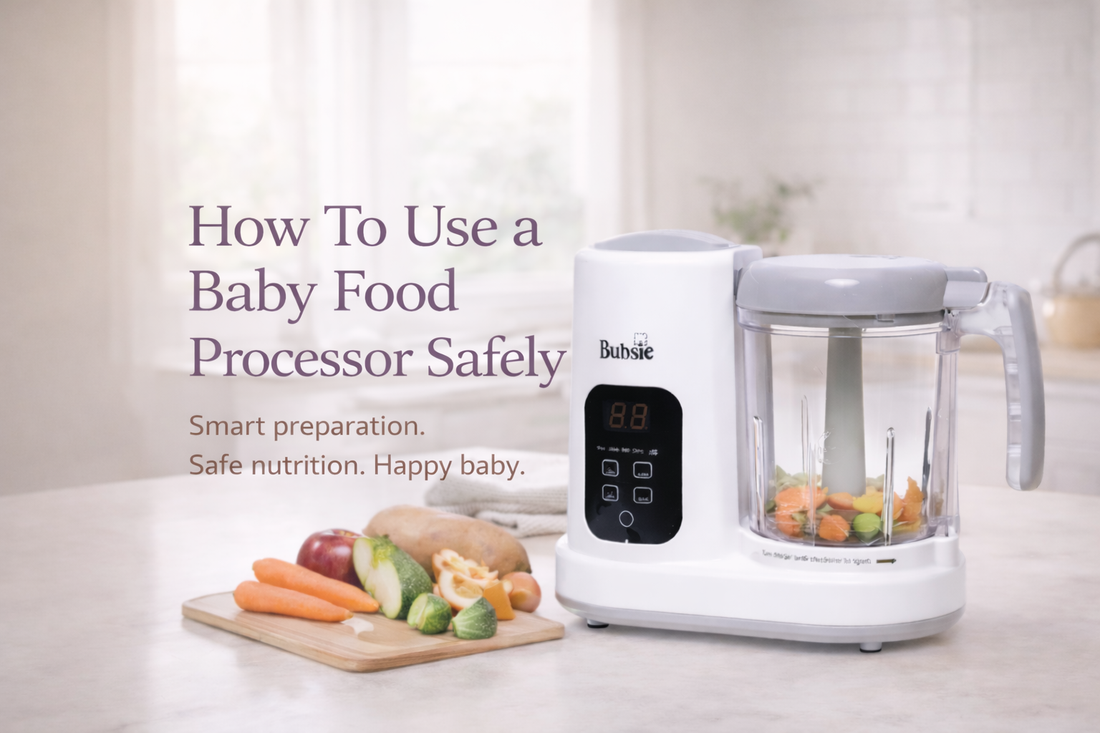
How To Use a Baby Food Processor Safely For Your Baby
Cooking fresh meals at home will allow parents to know exactly what their child is eating, however, safety is as important as nutrition. This guide helps you know how to use a baby food processor safely, while discussing the practical steps, hygiene practices, and wise usage habits that eliminate risks and keep your baby healthy. With reliable tools from Bubsie Family, parents can make feeding both convenient and secure.
Why Safety Matters When Preparing Baby Food
The immune systems of babies are in the process of development; hence, they are more susceptible to bacteria and contamination. Actually, in 2025, 39 babies in 18 states of the United States were admitted to hospitals because of suspected or confirmed infant botulism that was, at times blamed on contaminated formula; this really demonstrates how unsafe food can affect children's health severely. Proper handling, cooking, and storage can actually minimize the chance of such risks.
Using modern appliances designed for infant meals—such as a baby food maker or multi-function steamer—can simplify the process, but parents must still follow safe operating practices.

Choosing the Right Equipment for Safe Preparation
Not all appliances are created equal. Selecting high-quality tools helps prevent overheating, contamination, and mechanical issues.
Look for features such as:
- BPA-free materials
- Automatic shut-off functions
- Stable, non-slip bases
- Easy-to-clean detachable parts
- Steam cooking capability
Most parents like a baby food steamers and blender combo since it is a single device for cooking and pureeing, thus reducing the number of handlings through which bacteria could be introduced.
Visit our website for beautifully designed feeding solutions to make your experience more straightforward and safer.
Cleaning and Hygiene Before You Begin
Hygiene is the foundation of safe food preparation.
Before using any appliance:
- Wash your hands thoroughly with soap and warm water.
- Clean all detachable parts with hot, soapy water.
- Dry components completely before assembly.
- Sanitize surfaces where food will be prepared.
Using a tool such as a milk bottle cleaning brush can help to clean hard-to-reach parts and corners properly, thereby avoiding the buildup of residues, which can become a place for bacteria to grow.

Step-by-Step Safe Usage Process
Following structured preparation steps reduces risks significantly.
1. Wash and Prepare Ingredients
- Wash fruits and vegetables thoroughly under the tap.
- Take the peel off, discard the seeds, and remove the pits.
- Cut food into small, even pieces for uniform cooking.
2. Cook Food Thoroughly
Among the various ways of cooking, steaming is highly recommended for young children because it helps keep the nutrients intact, and at the same time, it gets rid of germs that can cause illness. The benefits of steaming baby food include better vitamin retention compared to boiling.
You can accelerate and facilitate this step by means of a baby food steamer and blender which combines the cooking and blending functions without the need for the transfer of hot food from one container to another.
3. Blend to the Correct Texture
- Make sure that the food first cools down a bit before you blend it.
- Add small amounts of liquid (water, breast milk, or formula) for smoother consistency.
- Avoid overfilling the bowl to prevent spills and motor strain.
4. Check Temperature Before Serving
Always test the puree on your wrist to ensure it is lukewarm, not hot.
Safe Storage and Handling Practices

Improper storage is one of the biggest safety risks.
Follow these guidelines:
- Refrigerate fresh food within 2 hours of preparation.
- Store in airtight containers.
- Use refrigerated food within 48 hours.
- Freeze portions for longer storage (up to 3 months).
Label containers with dates to track freshness easily.
Practical Baby Food Processor Safety Tips
Understanding common mistakes helps prevent accidents.
Important baby food processor safety tips include:
- Never operate the appliance with wet electrical components.
- Ensure lids are locked before blending.
- Keep cords away from water and heat sources.
- Do not leave the device unattended while running.
- Allow motors to cool between uses.
These simple precautions protect both the appliance and your child’s meals.
Avoiding Cross-Contamination
Cross-contamination occurs when bacteria transfer from raw foods to cooked food or surfaces.
To prevent it:
- Use separate cutting boards for raw meat and produce.
- Clean blades immediately after use.
- Wash your hands between handling different ingredients.
Parents preparing Homemade toddler food often manage multiple ingredients, making cross-contamination prevention especially important.
When to Replace or Upgrade Your Appliance
Over time, wear and tear can create safety risks.
Replace your appliance if you notice:
- Cracked plastic parts
- Loose blades
- Burning smells from the motor
- Electrical malfunctions
- Persistent stains or residue
Reliable brands like Bubsie Family prioritize durability and safe materials, which can reduce long-term risks for families preparing meals daily.
Discover Safe & Parent-Friendly Feeding Solutions
Explore thoughtfully designed feeding products created with convenience, hygiene, and your baby’s safety in mind.
Explore Feeding EssentialsSupporting Nutrition While Maintaining Safety
Safe preparation also supports better nutrition.
Freshly prepared meals:
- Retain more nutrients than heavily processed alternatives
- Allow ingredient control for allergies or sensitivities
- Encourage healthy eating habits early in life
A quality baby food maker can make routine preparation faster, helping parents stay consistent without compromising safety.
Key Takeaways
-
Clean hands, surfaces, and appliance parts before every use.
-
Steam cooking helps eliminate bacteria while preserving nutrients.
-
Always check food temperature before serving.
-
Follow proper storage timelines to prevent spoilage.
-
Inspect appliances regularly for wear or damage.
- Use structured baby food processor safety tips to avoid accidents.
A Safer Start for Every Meal
Learning how to use a baby food processor safely gives parents confidence that every bite supports their baby’s health and development. With thoughtful preparation habits and dependable tools from Bubsie Family, creating nutritious meals at home becomes both safe and stress-free.
Start your baby’s healthy feeding journey today by exploring trusted essentials at https://bubsiefamily.com/.
FAQ's
Q1. How often should I clean a baby food processor?
A: You should clean it after every use to prevent bacterial growth and food residue buildup.
Q2. Is steaming better than boiling for baby food?
A: Yes. Steaming preserves more nutrients and reduces the risk of water-soluble vitamin loss.
Q3. Can I store homemade baby food in the freezer?
A: Yes, frozen baby food can typically be stored for up to three months in airtight containers.
Q4. When can babies start eating pureed foods?
A: Most babies are ready around 6 months, but always consult your pediatrician for personalized guidance.
Q5. What is the safest way to reheat baby food?
A: Reheat gently using warm water baths or microwave in short intervals, stirring thoroughly and checking the temperature before serving.

